
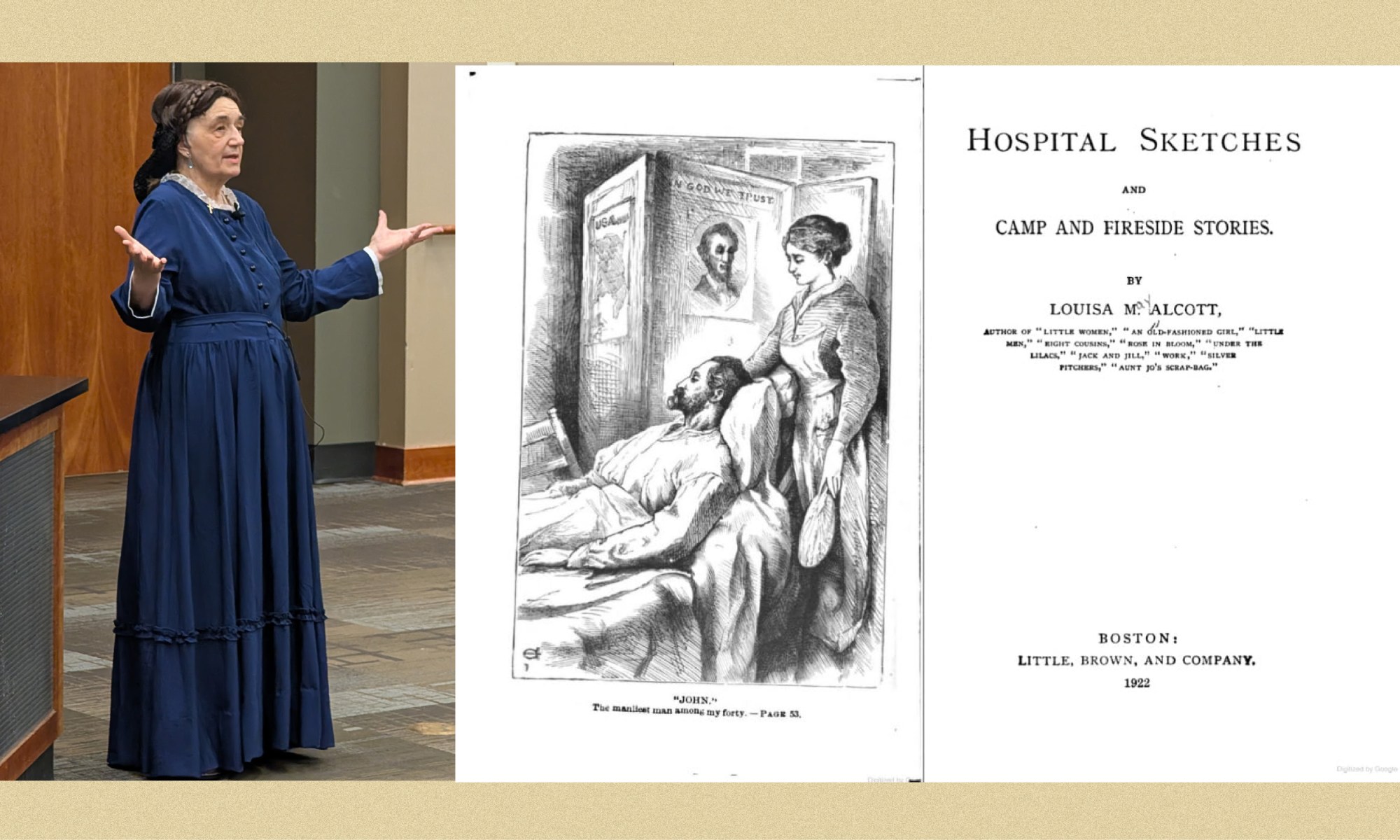
I am pleased to present this guest post by Joan Leotta, a storyteller/performer who brings Louisa’s fascinating story to life. In this post, she describes how she came to portray Ms. Alcott, using her skills to build a relationship between the author and the audience.
Since February 2024, I have been performing in a one woman show as Louisa May Alcott.
I’m not an actress; I’m a storyteller. There are a few differences in the style of presentation and engagement with the stories told and audience between storytelling and acting. In the storytelling world, unlike acting, no fourth wall separates performer and audience. It’s more like a real-life encounter with someone either telling tales at your kitchen table or in this case, meeting Louisa May Alcott in the created setting—in this case, she is coming to give a talk. In addition, all the material is of the performer’s own choosing, so the relationship between the character portrayed and contemporary person should be deep and personal. Finally, costumes, props, are kept to a minimum.
Bringing a real, historic person or creating any sort of single costumed character to life on the stage as a teller involves far more than crafting a script based on biographies, finding an era-appropriate costume, and a focus for performances for various audiences. Research is your best friend. Costumes and props help set the stage for the performance and to help the audience “feel” the era and ambience or mood, but the strength of the performance lies in the relationship forged between the teller and his/her subject.
How I Decided on Louisa
Several years ago, I debuted a script at a National Storytelling Association Fringe performance portraying a generic civil war nurse. The performance received complimentary reviews, but I never performed that show again because in the original script while the nurse is caring for two men, one Reb, one Union, she receives word that her own son has died. When I debuted the show, my own nineteen-year-old son had died only a few months earlier. I quickly changed the script to allow the nurse’s son to life, but I shelved the project.
The costume became the one I wore doing a humorous show as Belle Boyd’s maternal Aunt, the woman she lived with in Front Royal where she began her spying. I could not identify with Boyd enough to want to “be her” for forty-five minutes, but I found her Aunt to be a wonderful vehicle for talking about the notorious and outrageous spy. My civil war research helped and as for the nursing, bits and pieces of my knowledge in my writing.
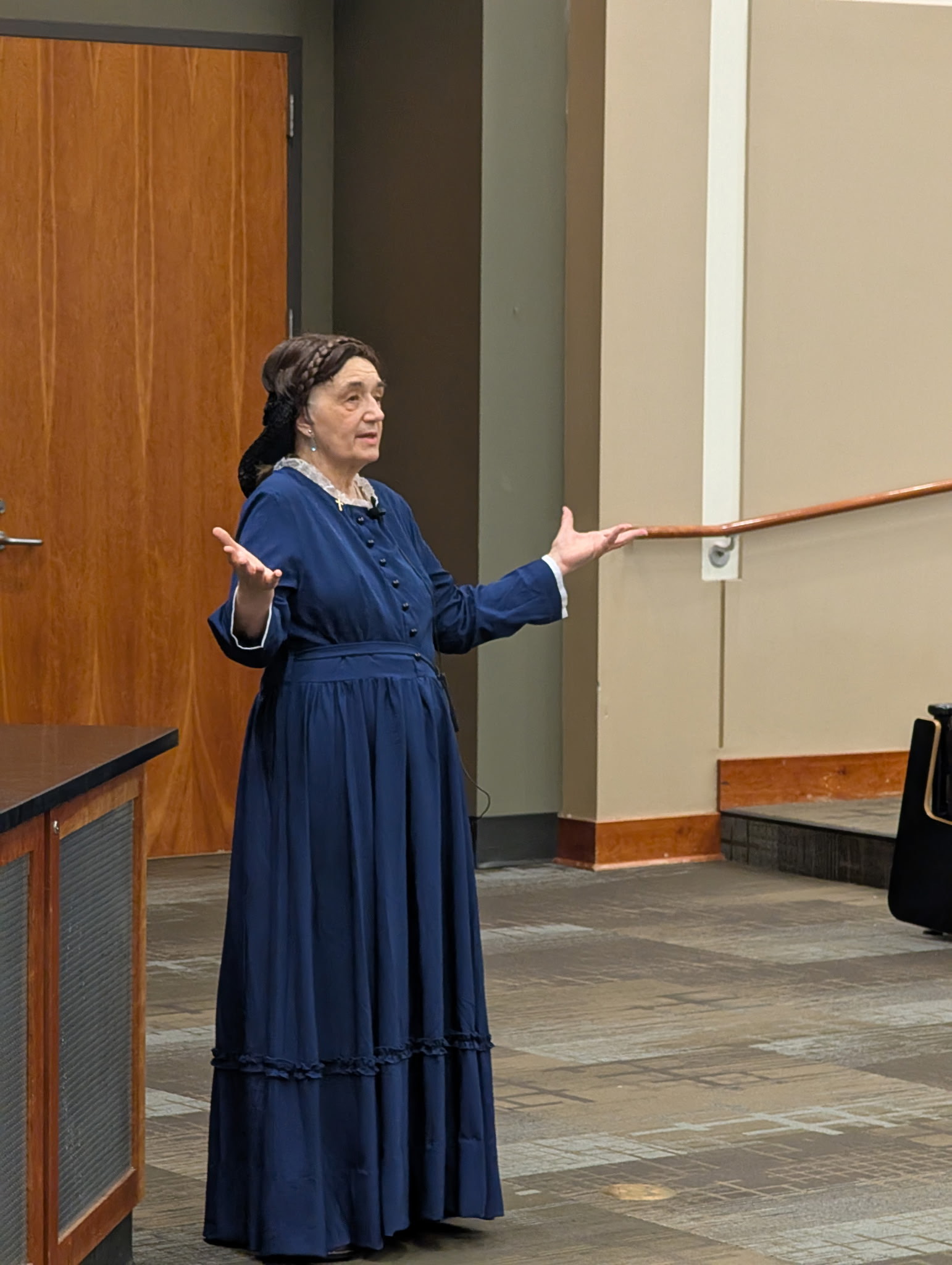
About three years ago, Louisa May Alcott, (LMA), was again prominently in the news with articles, books, movies, and discoveries of old manuscripts (many of her short stories written under pen names were coming to light). Little Women was an especially important book in my own life so, I wondered about applying my general knowledge of late 19th century I could work up a show featuring LMA. However, as I began deeper research, I realized that she and I (albeit me being on the lower end of the talent spectrum) shared many interests besides writing and performing. The more I learned about LMA, the deeper my fondness for HER not just her writing, grew. LMA’s love of family, of theater and performance, interest in civil rights, women’s rights, all of these we have in common. As writers, we both work in several genres—poetry, short stories, plays, essays, novels. Perhaps most importantly for my personal connection to her is that both of our lives had been marked deeply by the death of a loved one—an “out of order death”. For Louisa it was her sister. For me, my son.
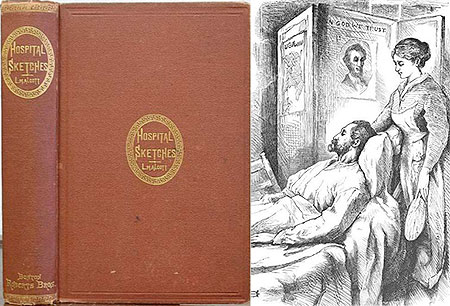
The more I read the more I realized that it was indeed LMA’s Civil War experience as a nurse that raised her writing to another, higher level, allowed her to reach deeply into herself and create the March Family. Her book, Hospital Sketches, a series of short “tales” blended real experience in a far rawer way than her previous short stories, her “blood and thunder tales” had done. Instead of simply blending imaginings of life and action to craft well written exposes of poor practices towards women, or shape an engaging mystery, Hospital Sketches is written at a visceral level, including her observations of her own interactions with the soldiers she nursed during the brief weeks she served as a nurse, until her illness forced her to return home.
Although the experience took her writing to a higher level, and her sales soared (making editors and publishers more interested in her writing), her illness had been treated with a mercury based medicine which led to lifetime of physical pain for this previously healthy, very active young woman. (Sources indicate that the mercury either activated a congenital issue or she suffered directly from mercury poisoning. She is known to have said that she never again had a healthy day.
Creating My Show
Having added a passion for the person herself to my love for her writing, I read more of her books and poems and re-read favorites. I plunged into research on her life from as many sources as I could find and retraced her steps in several cities.
Her body of work took place over a large swath of the late nineteenth century so to whittle down my presentation into a manageable stage show, I had to settle on a timeframe that placed boundaries on what I would say or do.
I decided to present LMA in the fall of 1873, freshly returned from her European trip with her sister May. At this time LMA was already a literary lioness. Little Women parts 1 and 2 and its second part (now both parts of the book we read as Little Woman), and the writing and publication of Little Men. I have the person introducing me set the stage scenario—a visit to a group, a talk before a larger group, etc.
This timeframe allows me to speak to most of the themes that people love—her own growing up how her writing developed, her true relationship with her parents and sisters, and that pivotal experience in the Civil War, along with the splash of fame and fortune that would allow her and her family to live comfortably after a life of true poverty. Even though LMA does not address her short stories in this period or the many other wonderful books she wrote after 1873, I am able to answer questions on those things after I return to the present and my own identity at the end of the show (after answering some questions as LMA)
Focus on Audience
At present, I have scripts that allow me to show three aspects of LMA—development as a writer (some of this is in all the shows, but there is one that is more book and writer heavy for book groups and for young people, school groups.) This is the focus That I gave in my first performances as LMA and is still a very popular show.
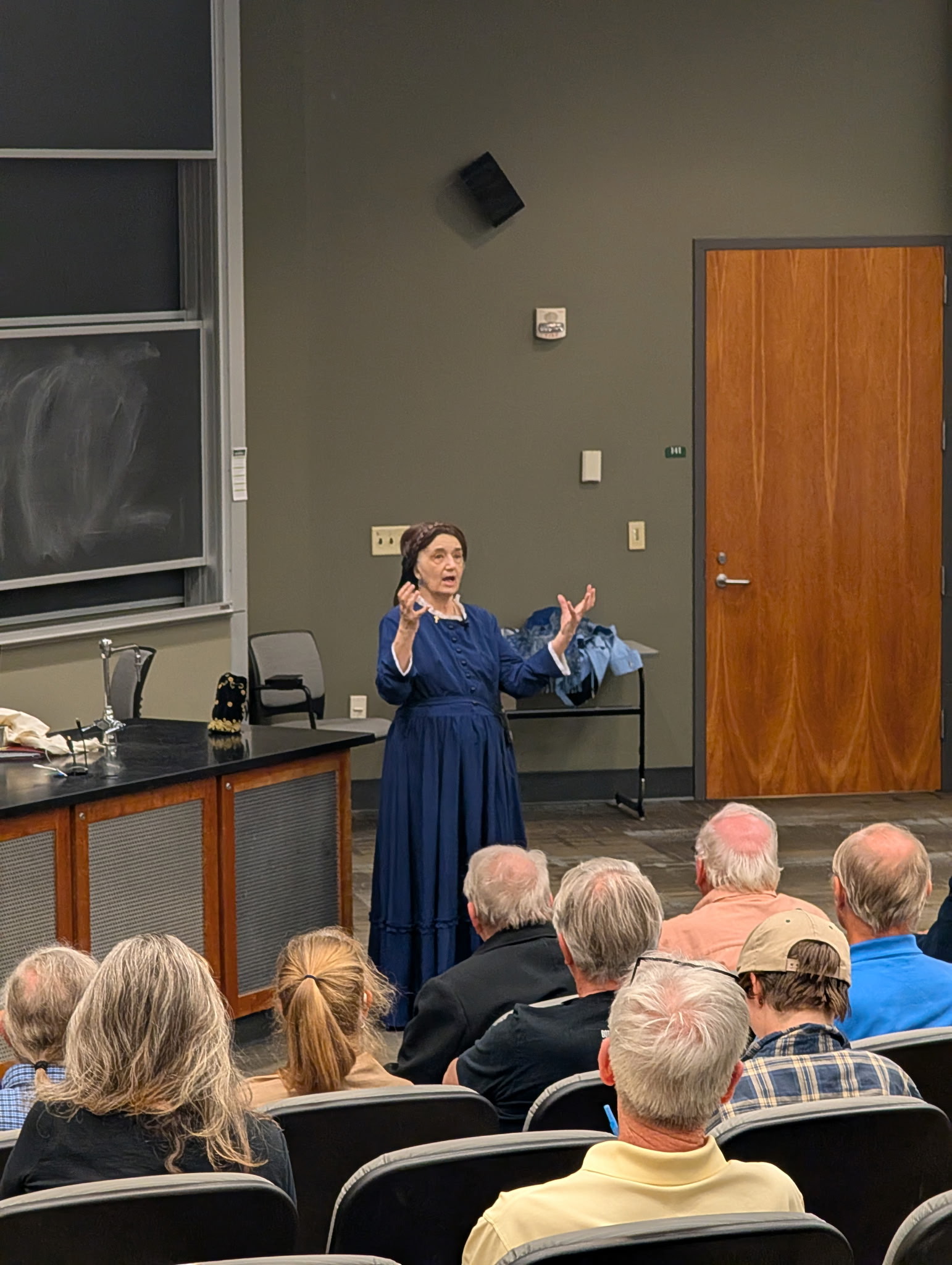
The second script (my favorite as a history nerd) shows her development as a writer and how her family’s work in abolition led her to become passionate about serving the Union cause. It offers a focus on her work as a Civil War Nurse. Last September, I performed for Civil War Roundtable in Ohio and one in West Virginia. I supplemented my knowledge of LMA’s work, working with wounded from the Battle of Fredericksburg, with research into the Ohio and WVA regiments that served there and who might have been her patients. This tweaking of the script to meet the interests of local groups is a standard in my work. After all, storytelling is a personal art—one on one, not one size fits all.
The third focus I have is on her as a seamstress. She was a superb seamstress. At one point she made all her sister’s clothing for school. One of her later books mines her own journals for words on sewing and she is known to have said that she could work on plots while sewing.
In addition, I’m doing further explorations of her short story writing, hoping to take a more scholarly approach to this aspect of her work to enrich my own writing and to help others discover and appreciate Louisa’s great skill in this arena.
Do I look like her?
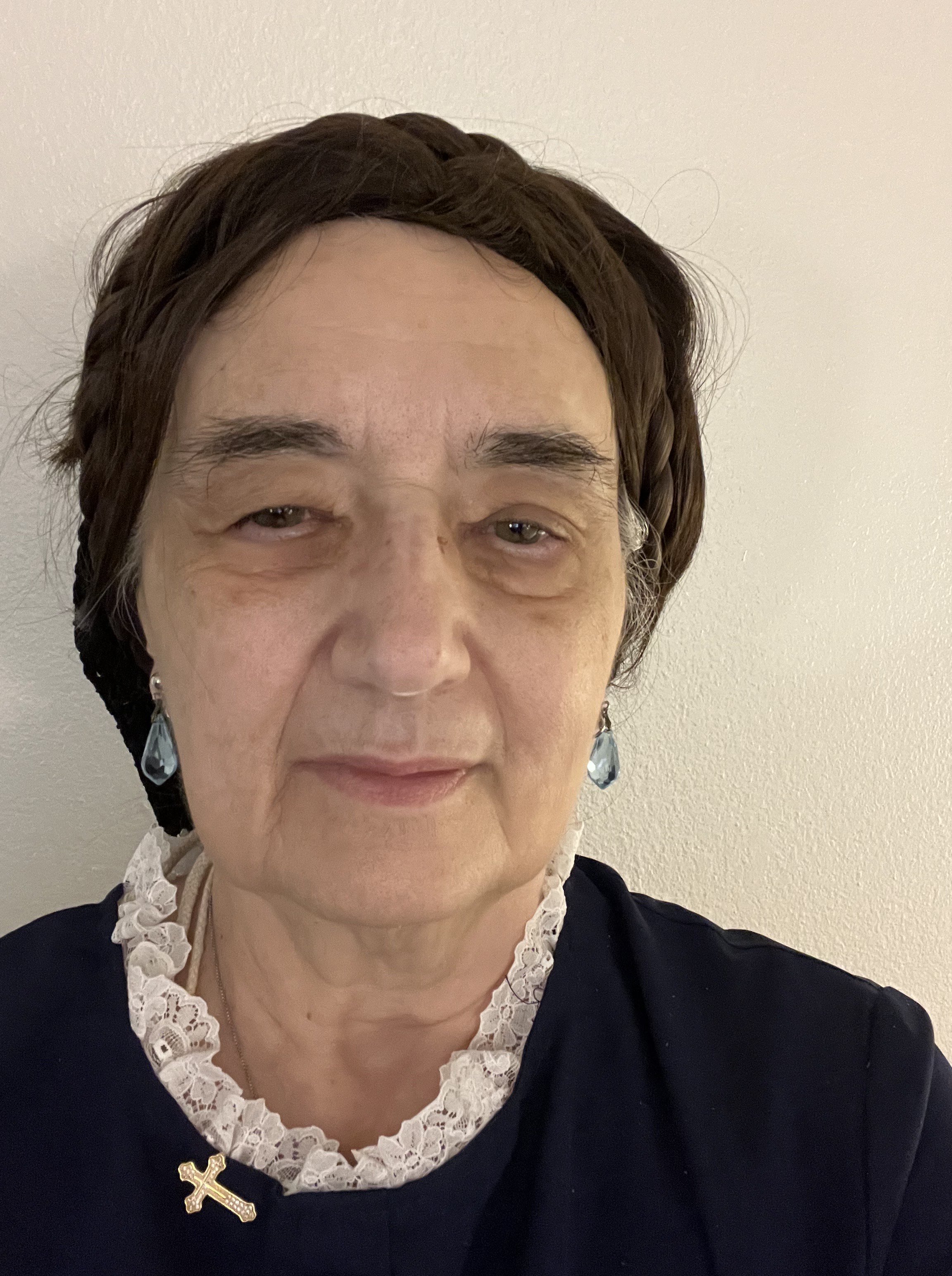
I’ve embellished my generic 1870s dress with a bit of lace and a cross similar to the one in my favorite photo of LMA. The hardest thing about my presentation is her hair. Both of us also share/shared a certain pride in our deep chestnut manes. My own hair, however, is now gray and thinner than it once was. So, I wear a wig that approximates but does not, in full truth fully recreate LMA’s crowning glory. However, it is very possible that after her bout with mercury her own once legal, luxuriant tresses were not as wonderful as they once were. There is an 1873 portrait of her (which she and her father hated) painted in Rome, which shows her hair as thin. My goal is to resemble her physically, but creating an image of her is done through what I say, more than on the props around me.
After the Performance
I answer questions as Louisa up to the date of the performance (Sept 2, 1873).Then, using a bit of stagecraft, I transform back into Joan Leotta and answered other questions based on my research, relating to things not known to the public at the time (as in her short stories) and questions about her other books.
Final Words
Last September, I was paid the compliment of being told that I truly brought her to life for many in the audience. My work as a teller is rekindle the spark of love for Louisa and her work in the audience and encourage them to further their own knowledge of this great writing hand her work.
If my work presenting her brings even one more person to a greater understanding and love for LMA and her work, then I will count my work as a success.
Joan Leotta is a writer and story performer. For both page and stage her focus is to entertain, inform, and encourage her audiences. She has been delighting children and adults for the past thirty years with her folk tale retellings, personal stories, and one-woman shows with historic characters. Louisa May Alcott is the latest of her first person costumed shows and has been received by library audiences with comments on the fun she brings to the presentation of the lively Louisa May as she effortlessly describes writing process, world outlook, and reaches out to the audience with writing advice. Her performances of Alcott that focus on Louisa May’s role as a Civil war nurse display Louisa May’s compassion for the soldiers, her intense love of country, and tell how the experience changed Louisa May as a writer and a person, making the writing of Little Women and subsequent novels best sellers. At a Civil War Roundtable at the Blennerhassett Island State Park, Parkersburg WV, the President of the Civil War historical group said, ” You brought Louisa May Alcott to life for us !”
She even asked for Joan to autograph her personal childhood copy of Little Women.
Contact Joan via email (joanleotta@gmail.com) to book a meeting with Louisa May for audiences ranging from upper elementary through adult, specialty groups such as sewing “circles”, Civil War groups, travelers to Italy who want to retrace her steps. Joan is willing to bring this show or any of her folktale programs or her other characters to schools, libraries, book clubs, other groups, in person or by zoom. Let her know your needs, interests and audience age and she will craft a custom program directed at those interests.

Are you passionate about
Louisa May Alcott too?
Subscribe to the email list and
never miss a post!
Facebook • Instagram • X


