Elisabeth Alcott through the eyes of her father

lizzie alcott2By the time Elisabeth Sewall Alcott was born, Bronson had moved on from chronicling the daily activities of his daughters to exploring the soul. In Eden’s Outcasts, John Matteson writes that “Elizabeth was fairer than her elder sisters and … was the model of serenity that Bronson had vainly hoped Anna and Louisa would be. (pg. 84, Eden’s Outcasts: The Story of Louisa May Alcott and Her Father, ebook)” Calling his work “Psyche, or The Breath of Childhood” (aka “An Evangele”), Bronson “with naïve eagerness, plunged into his impossible task.” (Ibid)

Bronson’s ideal

Elisabeth and Bronson were soul mates. While Anna was often referred to as his favorite (with the vast majority of his letters to his children addressed to her), he appears to have placed Lizzie on a higher plane. Anna was a real child with virtues and faults; Lizzie was theoretical, just like “Psyche.”

High standards

In an Ode he wrote to her at Fruitlands on her eighth birthday (most of which had nothing to do with his little girl), note the heights to which he places her (underscoring is my emphasis):

IV

fruitlands smHither we all repair
Our hope and love, to bear,
To celebrate
In rustic state,
Mid’st this refulgent whole
The joyful advent of an angel soul,
That, twice four years ago
Our mundane life to know,
Descended from the upper skies
A presence to our very eyes,
And now before us stands
And asketh at our bounteous hands
Some tokens of our zeal
In her celestial weal
Before us stands displayed
In raiment of a maid,
Unstained and pure her soul
As when she left the Whole

That doth this marvellous scene unrol [sic]
And day by day doth preach
The Gospels meant for each

That on this solid sphere
Designed for mortals were.

V
amaranth-767690… And be a flower that none shall pluck away
A rose in Fruitlands quiet dell
A Child intent in doing well;
Devote, secluded from all sin
Fragrant without, & fair within,
A plant matured in Gods device
An Amaranth in Paradise
(The Letters of A. Bronson Alcott edited by Richard Herrnstadt, pg. 105-106)

Granted, this was Fruitlands and Bronson was at the zenith of his Transcendental zeal but subsequent letters to Lizzie (and they are few) rarely point out character flaws. No doubt the polar opposite of the letters he wrote to Louisa!

Idolized

Even as an emerging adult, Lizzie was idolized by her father as shown in this letter dated August 10, 1853):

“Elisabeth’s part comes off to the quietest perfection in whole and detail; the apartments all [word] their tidy mistress whose housekeeping throughout, for ought I can see, vies favorably with that of the absent Matron alike in neatness promptitude and efficiency to the credit of her teacher, and comfort of guests.” (Ibid, pb. 166)

Anxious yet absent father

Brooklyn_Museum_-_The_Invalid_-_Louis_Lang_-_overallDuring my visit to Houghton last Saturday (see previous post), I came across several references to Lizzie’s illness in Bronson’s letters. Although far from home (and inexplicably slow in returning there), he was deeply concerned about her welfare, as shown in this letter from November of 1857:

“Keep me informed of every matter pertaining to your welfare. And let me hear weekly if you can command the leisure from our imposed cares. Elisabeth’s condition you cannot fail to state. To her, and all, much love.” (Houghton Library, Amos Bronson Alcott papers MS Am 1130.9 (4))

Bronson is greatly concerned about Lizzie’s weight loss and refers to it consistently in his letters from 1857, in very exacting form (underscoring is my emphasis):

 “Anna promised and so will write: and the Invalid shall add her fortnight’s gain, if she can, in the pounds avoirsdupois and ounces exact, by the inevitable standard. Hoping for the good tidings from the family group, and that soon, I remain Yours, and Theirs ever …” (Ibid, November 20, 1857)

Advice to the Invalid

tumblr_mhneo1aZRC1r94vvxo1_500In a longer passage, Bronson offers advice to Abba regarding Lizzie’s care:

“I mean to have some quiet talk with Dr. Jackson, who comes up this afternoon from Glen Haven, and learn something helpful to Elisabeth if he has any information for us. Of one thing I am certain already: she must use water–warm water even–with great discretion now in her present enfeebled state, having no heat to spare in too frequent bathing; and be sure she never bathes in cold water, or before going to bed. The beef tea experiment she need not report.–Keep yourself warm, my Child, take fresh air as you can safely, ride rather than walk at present, keep the good watch and consult our experiences about your food, and sleep, and occupations, and, more than all else, encourage good hopes, esteeming yourself gaining as your spirits waken and your interest in life and the little things becomes more active and freshens from week to week. I do not say, day by day. You will have ebbs and langours, and little discouragements, but the months will measure gain, to you, if not in flesh just yet or weight, in comfort and slow mitigation of the old troubles; the cure working itself out for you in the reasonable manner and time. Not to lose is great gain, and the pledge of restoration. So be a good Child and get well in the best way.–And write me, sometimes about your day’s occupations and any thing you care to communicate. But be careful about using your eyes, or any of your poor senses, rashly or too long at once, Take care of the draughts of air, and practice your usual caution in every thing. I shall write to you now an then, and have you much in mind.” (Ibid, November 21, 1857; also The Letters of A. Bronson Alcott, pgs. 263-264)

Remaining positive

spoon with medicineBronson, naturally, is very concerned about Lizzie’s state of mind. What I found surprising was the total lack of reference to prayer or calling on God for assistance, strength or consolation. Lizzie was expected to use her own will to make herself better. Here is another example:

 “… Dear Lizzy. I shall hear particulars always gladly, not sadly now. As soon as may be, dispense with the pellets and powders, and find the strength that can feed itself and increase on the virgin substances–the social influences–friendly food for body and soul.” (Ibid, December 1, 1857; also The Letters of A. Bronson Alcott, pg. 267)

Gentle scolding

In this letter, dated December 14th of that same year, Bronson is obviously receiving news from Abba that Lizzie is resisting treatment. There is an added sense of urgency to this passage with a strong (and rare) admonition from Bronson:

 “I am anxious to hear. Your last letter brought agreeable news. Lizzy must replenish her Spirit by all good helps: flesh and weight will come–it may be so slowly and imperceptibly as to tell nothing to the senses and or the scales for some time–but she must not expect Nature to rally from such a shock forthwith to bring the health she so desires. Pray let me know just how she is, and how she Behaves by Night and by day. I can excuse every thing. Only she must take the part of painstaker about herself, and not defeat the helps and hopes of careful nurses and kindred, by any imprudences of hers. I will not talk for  for [erasure]–my precious patient, but come home to see it, eye to eye, if she will not mind me otherwise.” (Ibid, December 14, 1857; also The Letters of A. Bronson Alcott pgs. 269-270)

Rare words from a teenaged Lizzie

I was fortunate to find a rare letter from Lizzie written when she was seventeen. It is short and sweet, revealing little on the surface. However, I was stunned at her handwriting, so meticulous, not changed much from her Hillside journal except that it was even neater. Each line is perfectly straight. It looks like fine and simple typography. Yet between the lines of sweetness there is a sense of pathetic longing for her beloved, the ever absent father (I wish I had permission from Houghton to post the picture I took of the letter, but I don’t have it):

Dearest father,
I suppose the letters should not go without a word from me, as I promised I would write, We were all so happy this morning to get your beautiful letter, telling how pleasantly you were living, and of your success. We live along here without you, but I am sure miss you very much. Annie is very good about writing and so we get her pleasant letters every week, and I wish we heard as often from the dear father; but I suppose you are very busy, tho am sure, do not forget us. Your loving Lizzie.
(Houghton Alcott family additional papers, 1724-1927 MS Am 2745 (71)

Keeping vigil

AmosBronson-Alcott-WC-9179505-1-402When the passing finally came in March 14, 1858, Bronson’s beloved passed into eternity; he kept an all-night vigil by the wasted body that remained behind:

Bronson Alcott sat up with the body of his child all night. No one else approached him. His little lost Psyche, who had seemed to him in her infancy the most promising of all his daughters, alone kept him company. One of the brightest auguries of his life had vanished with her loss. (Katharine Anthony, Louisa May Alcott, pg. 89)

Click to Tweet & ShareElisabeth Alcott through the eyes of her father http://wp.me/p125Rp-1uL

Are you passionate about Louisa May Alcott too?
Send an email to louisamayalcottismypassion@gmail.com
to subscribe, and never miss a post!
Facebook Louisa May Alcott is My Passion
More About Louisa on Twitter

Susan’s ebook, “Game Changer” is now available From the Garret – download for free!

A day at Houghton: Getting to know the inner Bronson through his own hand

houghtonEver since last July I have dreamed of the day I could return to the Houghton Library at Harvard and Saturday was that day. I had made a connection with one of the librarians who had supplied me with scans of three of Abba’s letters (see previous post). She told me that a collection of letters assembled in a book and labeled for Bronson might hold clues on Lizzie. It’s again a case of hidden in plain view. She is on a quiet crusade to properly catalogue each letter.

This librarian’s instinct was correct. A careful reading of Bronson’s letters did indeed present many clues and opened up a Pandora’s box of questions as well. But first, I want to share insights into Bronson that came to light by reading these letters.

The value of handwritten letters

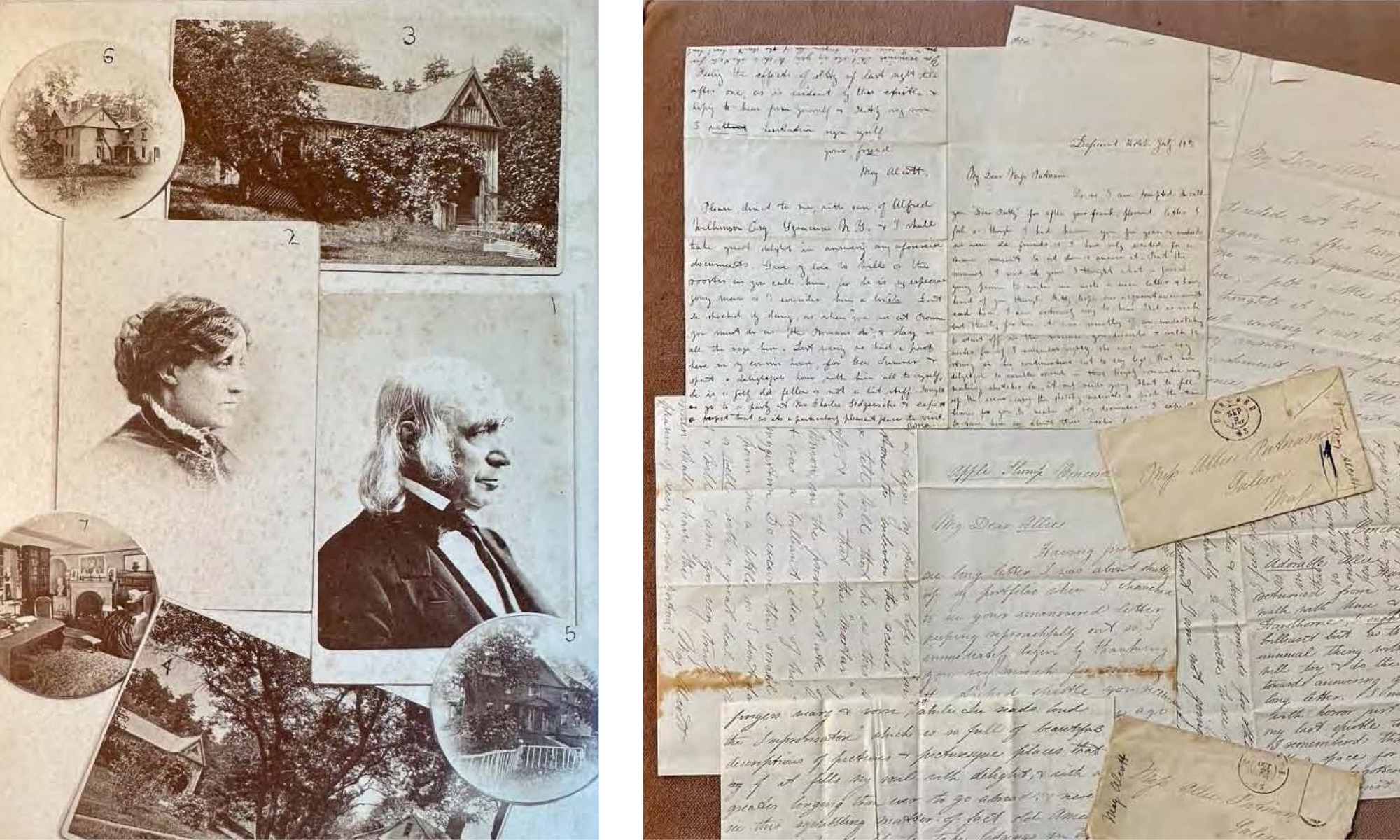
It continues to amaze me how much of a difference it makes reading primary sources. A letter, penned by the hand of an iconic historical figure does much to make that figure a real flesh-and-blood person. In a sense they become smaller, in a good way, by becoming peers. Since the Alcotts lived during the time of my great-grandparents, it feels like I’m reading letters from them.

from smallnotes.library.virginia.edu - (MSS 7052-c, Clifton Waller Barrett Library of American Literature. Photograph by Petrina Jackson)

from smallnotes.library.virginia.edu – (MSS 7052-c, Clifton Waller Barrett Library of American Literature. Photograph by Petrina Jackson)

It disturbs me to think of what future historians will be missing out on by not having handwritten accounts. Our digital age of endless photos, videos and email create a barrier between the person we are studying and ourselves. A sterile email cannot compare with a letter written with the tip of a quill pen on textured paper, letters written in either beautiful broad strokes (Bronson), hapless scrawl (Abba) or picture-perfect script in totally straight lines (Lizzie). A rare letter by Lizzie, written when she was seventeen, revealed so much more by seeing the handwriting than by just revealing the words. This I will get into in the next post.

Many admirers

What first surprised me about the letters were the numerous ones addressed to Bronson from admirers. Often he is gently (or not so gently) mocked for his Conversations but in this collection there were not only letters but small printed flyers announcing his Conversations with the average price of a ticket being three dollars. In conversations he proposed from Walpole in August, 1856, the topic discussed was the Private Life (Descent, Home, Health, Pursuits,Victories). The flyer states, “The discussions, it will be perceived, are suited to select companies, and invite the protection of the parlour, and the presence of ladies particularly.” (Letterbooks of ABA Houghton MS Am 1130.9 (3)).

Flawed business plan

AmosBronson-Alcott-WC-9179505-1-402The letters from admirers spoke about the meaningful nature of his Conversations; many of these people extended invitations for him to come to their town to speak. There were informal expense sheets showing the costs of holding these Conversations which made it plain why Bronson never made any money. His audiences were of necessity, small and intimate. Thus, the ticket sales barely paid for the expenses since he did not command the level of fees of his friend Emerson.

Similar experience

I had a flash of understanding and felt great kinship with Bronson and his Conversations. Before I got into writing I was a musician, writing and singing Christian music. I too preferred the intimate settings and I too had a very niche audience (which pretty much guaranteed intimate settings!). The mainstream audience didn’t understand the kind of music I played which I presented more as prayer. But, like Bronson I had my small group of admirers who wrote nice letters and invited me to their towns to perform. Over a sixteen year period I performed live and recorded a series of self-published CD. I never turned a profit but did manage to pay for everything out of my earnings. The music I offer for sale on my website still brings in a little profit which I now use to indulge my Louisa passion.

I approached my music with the same level of commitment as did Bronson with his Conversations. The difference, of course, is that I was gainfully employed and did music on the side as a passionate hobby.

Disciples of Bronson

Bronson had his “disciples.” One young man wrote two long letters to Bronson demanding a reply despite the fact that it was early 1858 and Bronson’s daughter Elizabeth was dying. The man was either clueless, or just unaware of the turmoil in Bronson’s life. His letters were filled with mystical proclamations which he obviously felt were brilliant (but likely were not). Bronson did eventually reply.

Anxious about the home front

In 1857 and 1858 during Lizzie’s illness, Bronson was in the Midwest conducting his Conversations. His frequent letters to Abba detailed the people he met and the success or failure of his efforts. It was clear, however, that there was an underlying anxiety about all that was occurring at home. While Bronson felt compelled to conduct his Conversations (and many would question that compulsion, myself included), his letters also demonstrated deep concern (which included advice and admonitions to Lizzie). I saw his detailed discussions of business as a means of putting off the more difficult discussion of reality. Usually that took place at the end of the letters.

Difficult patrons

And business had to continue. I recall one letter from a man in April of 1858 who had received notice from Bronson that he would have to delay his coming (as Lizzie had died in March). After the brief, perfunctory mention of sympathy, the man launched into all the inconveniences he encountered in trying to reschedule. Complaining that he had to “notify each person individually,” he demonstrated an incredible smallness of mind and heart.

Gracious sympathy

lizzieThere were others, however, who were magnanimous. A certain William Russell from Lancaster, MA was also informed of a delay in meeting Bronson and his response was as follows:

Mrs. R. and I sympathise (sic) deeply with Mrs. Alcott and yourself in the experience through which you have have been called to pass in the loss of your daughter Elizabeth. Her peculiar traits of mind and character impressed us very deeply with their indications of ample promise for a noble and generous development. Judging from our own experience, however, I think we can assure you that while such a loss leaves a deep felt sense of privation, the solid consolation will from year to year of life, be strengthening in the heart, that such of its treasures are imperishable. Many of your serenest and happiest hours will be those in which the Beloved returns, in the silence of the soul, to irradiate it with her presence. (Ibid)

He too had sick daughter (Mary), a son studying away from home and two additional daughters named coincidentally, Anna and Lizzie.

Moment of truth

One letter from Bronson dated March 2, 1857 made a particularly strong impression. In Eden’s Outcasts, John Matteson had made reference to it.  Bronson describes seeing the play, “Medea,” and the impression it made on him:

“The play is exciting, yet enjoyable with all its appalling accompanyments (sic). I wished Anna with me and my family, yet the Spectacle of the Sacrifice would have been too much for my wife, and the tenderhearted Elizabeth, suggesting events too vividly, perhaps, of home experiments and the courage of Principle. I had “Fruitlands” before me, and ideas there celebrated and played out to the applauding snows – the tragedy of ox-team and drifting Family wailing their woes to winding winds. You shall imagine the sequel and the rest.” (Ibid)

It is quite rare to see Bronson express regrets about his actions; the only other time I can recall was after Abba had died and he had a chance to read her journals. Knowing how blunt Abba could be, it is no wonder that Bronson felt compunction about his behavior during their marriage after reading them. The light of revelation that shines on the soul once truth is faced can be searing.

Shedding light on the mystery

In the next post I will get into the advice and admonitions that Bronson sent to Lizzie through his letters. I have a feeling that much can be learned about this mysterious Alcott daughter through a careful scrutiny of the writings of her beloved soul mate.

Click to Tweet & Share: A day at Houghton: Getting to know the inner Bronson through his own hand http://wp.me/p125Rp-1uD

Are you passionate about Louisa May Alcott too?
Send an email to louisamayalcottismypassion@gmail.com
to subscribe, and never miss a post!
Facebook Louisa May Alcott is My Passion
More About Louisa on Twitter

Susan’s ebook, “Game Changer” is now available From the Garret – download for free!

Book Review: Fruitlands Louisa May Alcott Made Perfect by Gloria Whelan

fruitlands louisa may alcott made perfectOne of you (Julie) gifted me with a wonderful book and once I picked it up, I could not put it down. The book, geared for older children, is called Fruitlands Louisa May Alcott Made Perfect by Gloria Whelan.

A lost diary

The premise of the book is based on Louisa’s diary kept at Fruitlands. This was her first diary and sadly, only a few pages survive. They were miraculously found in the wall of the Fruitlands house years ago. Gloria Whelan maintains that Bronson destroyed much of it as he had also destroyed Anna’s kept during that time.

A tale of two diaries

Whelan through the power of storytelling restores it. But, she not only restores it, she presents two diaries, one written for public consumption as was the custom in the family, and one kept secret. In the first entry of the secret diary Louisa writes, “In the first diary there will be Louy, who will try to be just what Mother and Father would wish. In the second diary there will be Louisa, just as she is.”

Knowing that privacy was in short supply in the lives of the Alcotts, I had to work a bit to accept the premise but once I did I was swept into this book.

Real children

512 moving to fruitlands (socrates bust)Whelan is the writer I wish to be. She is a masterful storyteller, revealing so much through the details, dialog and actions of the characters. She fleshes out each child by comparing how they’d respond to a situation. From Louisa’s secret diary:  “Lizzie is good-natured and listens patiently to all the questions that Father puts to us. Anna tries hard to give the correct answers, but sometimes when the questions are difficult she pleads a headache and slips away. I say what comes into my head and know at once it is a foolish answer. I wish I could learn to keep my silence.”

Big sis Anna

Anna normally considered the “good girl,” the counterpart to Bronson, is cast in a somewhat unflattering light. She did indeed exhibit Bronson’s ways, especially his penchant for being judgmental. She did everything she could to please him at the expense of her sisters. Typical of an older sister, she never failed to lord it over Louisa and point out her faults.

Little sis Lizzie

Lizzie is Louisa’s safe haven. Whelan presents a flesh and blood little girl that we could truly love through the gentle actions, words of encouragement and total acceptance that she offered to everyone. In her public diary entry, Louisa recounts being rude to Mr. Lane (a common occurrence): Mr. Lane then talked with us upon the subject that all men are equal. I was rude and impertinent, for I asked Mr. Lane if we are all equal, why should be always be the one to tell us what to do? Even Mother was angry with my rudeness. I cried and begged Mr. Lane’s pardon.” In the private diary entry she recounts crying into her pillow and how “Lizzie crept over and put her arm around me. Anna asked, “Louy, why must you always say just what you think?”

A rich and complex child

512 louisa contemplatingThrough these diaries, Whelan paints a detailed picture of a complex child, acutely aware of her surroundings and compelled to speak her mind despite the consequence. I found myself engulfed in her soaring imagination as she organized games with the other children, pretending to be fairies, witches and characters from Shakespeare. Often Louisa would explore her darker side through the parts she chose to play making me think of the potboilers and thrillers she’d indulge in as an adult, stories ironically that would keep the family financially afloat.

A room of one’s own

from essitolling.wordpress.com

from essitolling.wordpress.com

Whelan described an exquisite place outdoors that Louisa claimed as the room of her own where she could write and think: “I found a weeping willow tree. It stands close to the river, and its overhanging branches form a curtain. When I pushed the branches aside, there was a leafy tent I could craw inside and be invisible to all … The breeze gently moves the trailing branches this way and that, so that first one part of the land is visible, and then another. It is as if pages in a book of pictures are being turned for me.”

Building tensions

fruitlandsThe best part of this book was the “slow burn:” the building desperation, not only of how the extended family would survive but Louisa’s own desperation with herself and all the criticism she took from the adults. I could feel the weight of the oppression on her as she was undermined again and again by her father and Charles Lane.  Whelan creates a keen sense of claustrophobia not only physically with the dwindling supplies and the fierce winter closing in, but psychologically as the community shrinks in membership and slowly breaks down into chaos.

Public and private

There were times when the choice of language and the conclusions drawn by Louisa seemed too mature for a girl of 10, despite her “old soul,” but in most cases, the diary entries rang with Louisa’s voice. What truly propelled the book was the ploy of first featuring Louisa’s entry for the masses followed by the entry from her heart. I couldn’t wait to read further and find out her take on the story.

The greatest complement I could pay this book? It ended far too soon. I’m reading it again. Thanks, Julie!

Click to Tweet & ShareBook Review: Fruitlands Louisa May Alcott Made Perfect by Gloria Whelan http://wp.me/p125Rp-1up

Are you passionate about Louisa May Alcott too?
Send an email to louisamayalcottismypassion@gmail.com
to subscribe, and never miss a post!
Facebook Louisa May Alcott is My Passion
More About Louisa on Twitter

Susan’s ebook, “Game Changer” is now available From the Garret – download for free!

Little Men: The Good Man (chapter 3, “Sunday”)

coverAs mentioned in a previous post about the art of domesticity, I have been reading Little Men, or Life at Plumfield with Jo’s Boys. The audio book version from Librivox.org has actually been my companion while doing yard work and gardening these past few Saturdays. Keeps my mind off of my aching joints and bones! Listening to Little Men as opposed to reading it has given me a chance to take a step backward and see the story as a stand-alone work.

Different from Little Women

I’ve had problems reading Little Men in the past because I had assumed it would be an extension of Little Women. Instead, it concentrates more on the boys and girls of Plumfield rather than Jo and Professor Bhaer (and after twelve chapters, I’ve seen little or no reference to the other main characters of Little Women with exception of Laurie). It reminds me of the experience of reading The Lord of the Rings trilogy by J. R. R. Tolkein. The magic of the story was lost for me after the first installment, The Fellowship of the Ring, because the Fellowship split up and went in different directions. It was the chemistry of the Fellowship that made the story special for me, just as the sisterhood of Meg, Jo, Beth and Amy made Little Women special.

A direction not taken

Some distance from Little Women has helped me to better appreciate the charm of Little Men although it did leave me wondering why Louisa chose to go this way with her sequel. Obviously the sisters are grown women now with their own lives but I would have thought she would have placated her fans with more about the sisters. Louisa was indeed a professional writer with a keen understanding of what sells, but she was independent too.

Why the book was written

John Pratt, husband to Anna, father to Fred and John

John Pratt, husband to Anna, father to Fred and John

Little Men was written as the result of the sudden death of Anna’s husband John Pratt. Louisa and May were in Europe at the time, taking the Grand Tour. When Louisa heard the news she immediately sat down to write Little Men so as to support her nephews, Freddy and Johnny, with its sales. It would follow then that the book would be written more with them in mind.

Much taken from real life

Like Little Women, Little Men is full of real life anecdotes, and in some ways, they are more obvious. For those of you with a thorough knowledge of Louisa’s life, these anecdotes jump right off the page. Yesterday while listening to chapters 6-12, I picked up on several which I’ll share in upcoming posts.

Bronson’s presence

AmosBronson-Alcott-WC-9179505-1-402

Amos Bronson Alcott

Her father Bronson is very much present in the good and kind Professor Bhaer as well as in Grandpa March. In Chapter 3, “Sunday,” I could hear Bronson speaking clearly through the voice of Demi, Meg’s son.

Consolation for Nat

Nat is the new boy, having only been at Plumfield a day or two when  chapter 3, “Sunday,” opens. At bedtime he notices a picture on the wall at the foot of his bed which he found  “peculiar … for it had a graceful frame of moss and cones about it, and on a little bracket underneath stood a vase of wild flowers freshly gathered from the spring woods. It was the most beautiful picture of them all …” Nat found himself longing to know more about the picture and Demi noticed. He began then to tell the story of Christ, The Good Man, as told to him by Grandpa March.

Demi shares Grandpa’s story

jesus_with_children300In the picture, Christ is blessing the children and Nat, who knows little about Him (except for His name being taken in vain), remarks how kind Christ looks. Grandpa March had given the picture to Demi after telling him the story of The Good Man many times. Demi related to Nat that Christ loved poor people, “and was very good to them. He made them well, and helped them, and told rich people they must not be cross to them, and they loved Him dearly, dearly.”

Help for Nat

chp. 3 Christ the Good ManHe continued to tell Nat about the life of Christ and how the “bad men killed Him.” Nat, only at the school for few days, took great comfort in the story; Jo, so grateful to her nephew for offering such comfort to Nat, thought to herself, “Demi is unconsciously helping the poor boy better than I can …”

Real life counterparts

There are references in Anna’s childhood diaries of conversations with her father on biblical stories: On Wednesday, September 2, 1839 she wrote, “I had a very interesting talk with father about Jesus. He explained to me some things that I wanted to know about what he did: about his feeding of the five thousand people, and about raising the dead to life, and stilling the tempest. I like conversations with father.” (from Houghton Library, Amos B Alcott Family Letters 1837 TO 1852 Vol. 1 to Vol. V 1852-1855).

anna large

Anna Bronson Alcott Pratt

In another passage, Anna shows her preferences for her father’s way of teaching religion: Sunday, December 22, 1839 “I went to Mr. Barnard[‘s church] this morning. I wish he would preach about something that I could understand as father does when he talks with me about being good. After I came home, father read about God’s making the World, about Adam and Eve in the Garden of Eden, eating the forbidden fruit, and being sent out of the garden, and about Cain’s slaying his brother Abel. Father explained it to me so that I might understand it. He wishes me to understand all I read. He talked with us about loving one another.” (Ibid)

For all of Bronson’s faults, his way of making religion a living faith for his children is to be commended.

It’s obvious through Demi’s story of the Good Man and its impact on Nat, that Louisa was greatly impacted too. The voice of her father through Demi was tender way that he told it to Nat, who needed that kind of consolation.

It’s these kinds of stories that makes Little Men special to me.

Click to Tweet & ShareLittle Men: The Good Man (chapter 3, “Sunday”) – Bronson Alcott in the voice of Demi http://wp.me/p125Rp-1u6

Are you passionate about Louisa May Alcott too?
Send an email to louisamayalcottismypassion@gmail.com
to subscribe, and never miss a post!
Facebook Louisa May Alcott is My Passion
More About Louisa on Twitter

Susan’s ebook, “Game Changer” is now available From the Garret – download for free!

Finishing up Eight Cousins: Your own worst enemy

Having finally finished Eight Cousins, it amuses me that an overarching theme of this book is that women can be their own worst enemy.

Who comes out well …

eight cousins under the mistletoe rose and uncle alecFor Rose, Uncle Alec is the hero and the boys are her true friends. Anyone who knows anything about Louisa May Alcott knows her penchant for boys (and how she longed to be one herself) so it’s no surprise that the male characters come out smelling sweet.

… and who doesn’t

The female characters do not do as well. Had the aunties had their way, Rose would have been a weak, neurotic, totally trussed-up caricature of a woman, lacking intellectual curiosity (let alone ability), unable to move even a step forward without great effort, either physically or emotionally.

eight cousins annabel bliss and rose chapter 15

And what of female friendship? Louisa’s offering was Annabel Bliss: a shallow, frivolous gossip with a slavish attachment to fashion.

There are always exceptions

eight cousins rose and phebeNow granted, we do have Aunt Peace, Aunt Plenty and Aunt Jessie, the only grown women who show character. They are quiet and unassuming, generous in their love of Rose. But even Aunt Peace and Aunt Plenty misread what Rose needed by introducing her to Annabel.

There is Phebe the maid whose sharp mind and desire to better herself make her and Rose fast friends. And Rose is eager to pass down to Phebe everything she has learned, not from her aunts, but from her uncle.

Rose and Phebe are the only female characters to come out looking good. And it’s mainly because of the influence of Uncle Alec.

Nobody’s perfect

eight cousins the clanThe boys have their faults to be sure. The older ones smoke and the younger ones read trashy books. They are impulsive, boisterous and willful. They tease Rose and pull pranks on her. Charlie (aka the Prince) has a falling out with Archie because he wants to follow a fast crowd of boys; all Archie can do is preach at him. At one point Mac’s thoughtlessness caused Rose to wait in vain for him in the bitter cold and become quite ill as a result.

Faults? Yes. But these characters redeem themselves over and over again because of their buoyant spirits, generous love and their desire to better themselves, often due to Rose’s influence. They are alive, they move, they grow.

The real sin

"Rose and her Aunts", frontispiece illustration to the first edition, Roberts Bros, Boston, 1875 (Wikipedia)

“Rose and her Aunts”, frontispiece illustration to the first edition, Roberts Bros, Boston, 1875 (Wikipedia)

Most of the women, however, are stagnant. There is little to no growth for any of them with the exception of Rose and Phebe. Some not only don’t wish to grow but they want to deny that growth for Rose. They are small-minded, horrified that Alec would teach Rose about her body, deny her the wearing of corsets, allow her to run about outdoors, or wear comfortable clothes that would actually serve a function.

Quite a damning portrait of women. Louisa knew her foes well. Women would never achieve true autonomy on their own. A male element was necessary, whether it be physical, such as Uncle Alec, or simply in the way of thinking.  Since Louisa always thought like a man, it was natural to her that women should be free to be everything they were meant to be. She had little patience for the Aunt Janes and Myras of this world.

Meant for children …

the eight cousinsNow granted, Eight Cousins is a children’s book and the characters are drawn in broad strokes of black and white. In fact, there’s nothing much in this book that is subtle but children are not interested in subtly. Children over the years have loved the warm and fun relationships between Rose and the clan. I certainly enjoyed the special relationship Rose had with Mac, seeing him through his ordeal with his impaired eyesight. There’s tenderness and respect in the relationships between Rose and her cousins.

Knowing Louisa as I do, however, I cannot help reading between the lines and seeing what lurks beneath. Eight Cousins is a stinging indictment of 19th century women. It is also a celebration of enlightened men, many of whom Louisa had the privilege of growing up with.

… yet something for adults too

So times I regret that I never read these books as a child. I would love to read them not knowing what I know about Louisa or as a 50-something woman in the 21st century. I do, however, find comfort in these books as I’m sure many children have over the years. Louisa serves up great comfort food for the soul.

Click to Tweet & ShareFinishing up Eight Cousins: Your own worst enemy http://wp.me/p125Rp-1tP

Are you passionate about Louisa May Alcott too?
Send an email to louisamayalcottismypassion@gmail.com
to subscribe, and never miss a post!
Facebook Louisa May Alcott is My Passion
More About Louisa on Twitter

Susan’s ebook, “Game Changer” is now available From the Garret – download for free!

Much-needed repairs to The Wayside will close the historic house for two years

Be aware if you are visiting Concord: The Wayside, once known as Hillside to the Alcotts, will be closed for renovations for the next two years. Minuteman National Park which maintains the home has acquired the much-needed funds to effect repairs. Neighborhood walking tours will be given for free by the Wayside tour guides as the work continues.

Here’s a portion of the article by the National Park Service, courtesy of the Concord Patch:

The Wayside, Home of Authors, Closed for Repairs

While the house is closed, NPS rangers will give free neighborhood walking tours.

10-wayside pretty view

The following information was provided by Minute Man National Historical Park.

Do you know what site with literary associations was the first to be preserved by the National Park Service? Do you know where Louisa May Alcott wrote her first published work? Do you know the location of the only home ever owned by Nathaniel Hawthorne?

If you answered The Wayside on Lexington Road in Concord, you would be correct. As part of Minute Man National Historical Park since 1965, it has welcomed visitors for five decades. Now, it will be closed for two years while undergoing much-needed repairs.

Work will include replacing all of the cedar roof shingles, repairing the metal roof on “Hawthorne’s Tower” and replacing the metal roof on the piazza (porch), replacing gutters and downspouts, repointing the stone foundation, repairing the chimneys, restoring ceilings and walls, and replacement of historic wallpaper and carpet.

Click here for the rest of the article.

Click to Tweet & Share: Much-needed repairs to The Wayside will close the historic house for two years http://wp.me/p125Rp-1ts

Are you passionate about Louisa May Alcott too?
Send an email to louisamayalcottismypassion@gmail.com
to subscribe, and never miss a post!
Facebook Louisa May Alcott is My Passion
More About Louisa on Twitter

Susan’s ebook, “Game Changer” is now available From the Garret – download for free!

Eight Cousins and Little Men: The art of domesticity

I am finally getting around to finishing Eight Cousins. I admit this book has not held my interest like I hoped it would but now that I’m getting closer to the end, I’m enjoying it more. Perhaps I know too much back story (such as the fact that Louisa didn’t really enjoy writing this type of book). Perhaps I needed to read it when I was a kid. The book has a “formula” feel about it but it has its charming moments.

One of those moments occurred in the reading of Chapter 16, “Bread and Buttonholes.”

Giving value to domesticity

As much as Louisa held to feminist ideals, she never dismissed the importance of the family, the home and its care. In this chapter (as she also did in Little Men, Chapter 4, “Patty Pans”), she raises domesticity to a higher level.

A surprising choice . . .

eight cousins bread and buttonholesAs Chapter 16 opens, Rose approaches Uncle Alec with regards to finding a trade to learn. She has no special talent in the arts so she is seeking guidance as to what to learn. When Uncle Alec recommends “housekeeping,” Rose is surprised, asking “Is that an accomplishment?” I appreciated Uncle Alec’s response:

 “Yes; it is one of the most beautiful as well as useful of all the arts a woman can learn. Not so romantic, perhaps, as singing, painting, writing, or teaching, even; but one that makes many happy and comfortable, and home the sweetest place in the world. Yes, you may open your big eyes; but it is a fact that I had rather see you a good housekeeper than the greatest belle in the city. It need not interfere with any talent you may possess, but it is a necessary part of your training, and I hope that you will set about it at once, now that you are well and strong.”

. . . and an unexpected teacher

When Uncle Alec announces that Aunt Plenty will be her teacher, Rose offers the common perception of housewives:

“Is she accomplished?” began Rose in a wondering tone, for this great-aunt of hers had seemed the least cultivated of them all.

It is here that Louisa, ironically through Uncle Alec, lifts domesticity to a higher plane:

“In the good old-fashioned way she is very accomplished, and has made this house a happy home to us all, ever since we can remember. She is not elegant, but genuinely good, and so beloved and respected that there will be universal mourning for her when her place is empty. No one can fill it, for the solid, homely virtues of the dear soul have gone out of fashion, as I say, and nothing new can be half so satisfactory, to me at least.”

Rose’s achievement

Rose goes on to learn how to cook from Aunt Plenty with her crowning achievement being a perfect loaf of homemade bread for her uncle, made with great care and presented with love.

Appreciating the art of domesticity

chapter 16Having no natural talent in all things domestic, I envy those who have that talent. Matters of the home are often dismissed today (as it was beginning to be back in Louisa’s time) as lowly, commonplace, even demeaning: definitely not a worthy pursuit for today’s liberated woman.

Louisa, however, brings out the intrinsic value of housekeeping, that of creating a welcoming environment where all family members feel loved and cared for. She equates good housekeeping with love.

Family example

I only began to understand that very recently with my sister-in-law. Cynthia is an accomplished gourmet cook (in the school of Julia Child, her idle; she has a recipe card with Julia’s autograph, framed on her stove) and is also talented in knitting and crocheting. She always creates a theme for the meal, complete with music, and at a birthday get-together back in March we were treated to an authentic French dinner. After stuffing ourselves with nine pounds of mussels smothered in butter and crème sauce and other goodies, we sat back, allowing the inevitable food coma to engulf us. I leaned back in my chair, too sleepy to talk, and began to observe, for the first time, how much love Cynthia put into the preparations and presentation. When dessert of delicious chocolate-coffee mousse was served, she declined eating hers, declaring that she’d rather watch everyone else enjoy theirs. It was at that moment that I had my epiphany, understanding my sister-in-law for the first time. She lavished her love generously through her cooking. In that moment, domesticity became art to me.

Eight Cousins shows this too. Rose is proud of her loaf, made with such love for her dear uncle after much trial and error. Uncle Alec receives the loaf with true appreciation of the care that went into its making.

Make homemaking fun

little men patty pansIn Little Men, Louisa shows a different side to domesticity, making it fun for the one little girl at Plumfield. Daisy was feeling left out because the boys would not allow her to join in their football game even though she and Demi would play on occasion. She begged Aunty Jo for a new game (or “play,” as she called it) and Jo, inspired by Daisy’s interest in making gingersnaps with Asia, the cook, outfitted her with a complete toy kitchen!

Playing cook

kenner easy-bake ovenReading the description of the child-sized stove and dishes, I thought back wistfully to the fun so many girls my age had with the Kenner Easy-Bake Oven. What a thrill it was to bake our own cupcakes, tiny as they were, in our own ovens. And then there were the Girl Scout cooking badges you could earn by learning how to prepare meals for your family. Never being good at cooking, I didn’t learn much but it was a lot of fun.

A balance of ideas

Eight Cousins in particular offers many different ideas about raising a girl to be a good woman that were considered peculiar or even radical in Louisa’s day. Rose, after all, was taught never to wear a corset as it was better for her health, was encouraged to run, jump and be active outdoors, and was shown how her body worked as seen in Chapters 18 and 19, “Fashion and Physiology” and “Brother Bones.” Her great aunts often grumbled about Uncle Alec’s strange ideas of raising a girl.

Yet Louisa, career woman and spinster, never turned her back on the value of the family and home life. Kitchen duty may not have been her favorite thing to do, but she understood how all the pieces of domesticity worked together for the whole – a happy, well-loved and well cared-for family. In later years she would welcome her sister’s child, Lulu, into her home as her own.

Louisa presented a balanced view of a woman’s life, understanding that the many pieces could work together in harmony so long as the men in her life allowed it. Uncle Alec was one of those men.

P.S. I have just started Little Men and will write more about it over the coming weeks and months. I realize that the posts I do about Louisa’s books don’t always come in a consistent manner. I have however, gathered up and organized all the posts I’ve done so far on the books covered in this blog so that you can find them. Visit the menu at the top of the page, select “Her Writing,” and from the drop-down menu, choose the book you’re interested in to see all the posts.

Click to Tweet & ShareEight Cousins and Little Men: The art of domesticity http://wp.me/p125Rp-1tx

Are you passionate about Louisa May Alcott too?
Send an email to louisamayalcottismypassion@gmail.com
to subscribe, and never miss a post!
Facebook Louisa May Alcott is My Passion
More About Louisa on Twitter

Susan’s ebook, “Game Changer” is now available From the Garret – download for free!