
By Jamie Lynne Burgess
Like one of her idols Charles Dickens, Louisa May Alcott had a knack for inventing character names. At their best, the renamings tell us something about the tone of the story and the character of the person: from Work’s untouchable David Sterling to Hospital Sketches’s bustling Tribulation Periwinkle.
In “Transcendental Wild Oats,” a short story written by Alcott that originally appeared in the New York newspaper The Independent in 1873, Alcott reimagines the family’s temporary utopian experiment at Fruitlands, and renames her father Bronson Alcott as Abel Lamb and his compatriot Charles Lane as Timon Lion–so the reader can easily tell which one more often bares his teeth.
As much as I enjoy Alcott’s autofiction–and the many adaptations and spin-offs of her works by other authors that are likewise fictitious–there’s an itch they don’t scratch. The reader or listener or viewer is always at a bit of a remove, observing as if through a glass window. Touching the characters with gloves on.
What few writers dare to do is take Alcott’s work and lift the veil: take a piece of autofiction, remove the veneer of the made-up names that are clearly stand-ins for Alcott’s parents and sisters, dig deep into the historical sources, and call them by their own names.
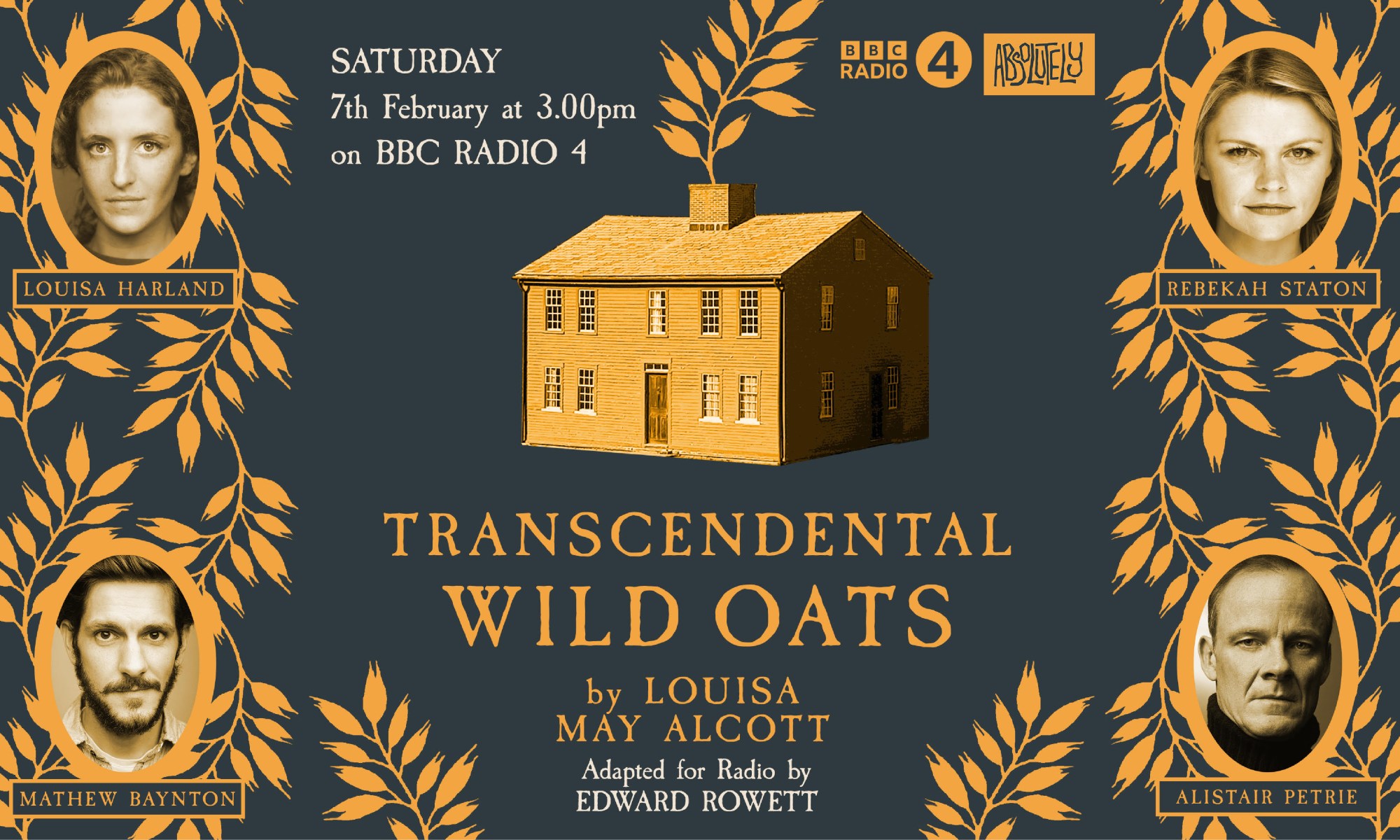
But Edward Rowett doesn’t shy away; he does the brave thing. In his new adaptation of Transcendental Wild Oats, which will air on Saturday, February 7 on BBC Radio 4, Rowett gives us a taste of what it could be like to have a real Alcott biopic, the one Alcott fans have often dreamed of.
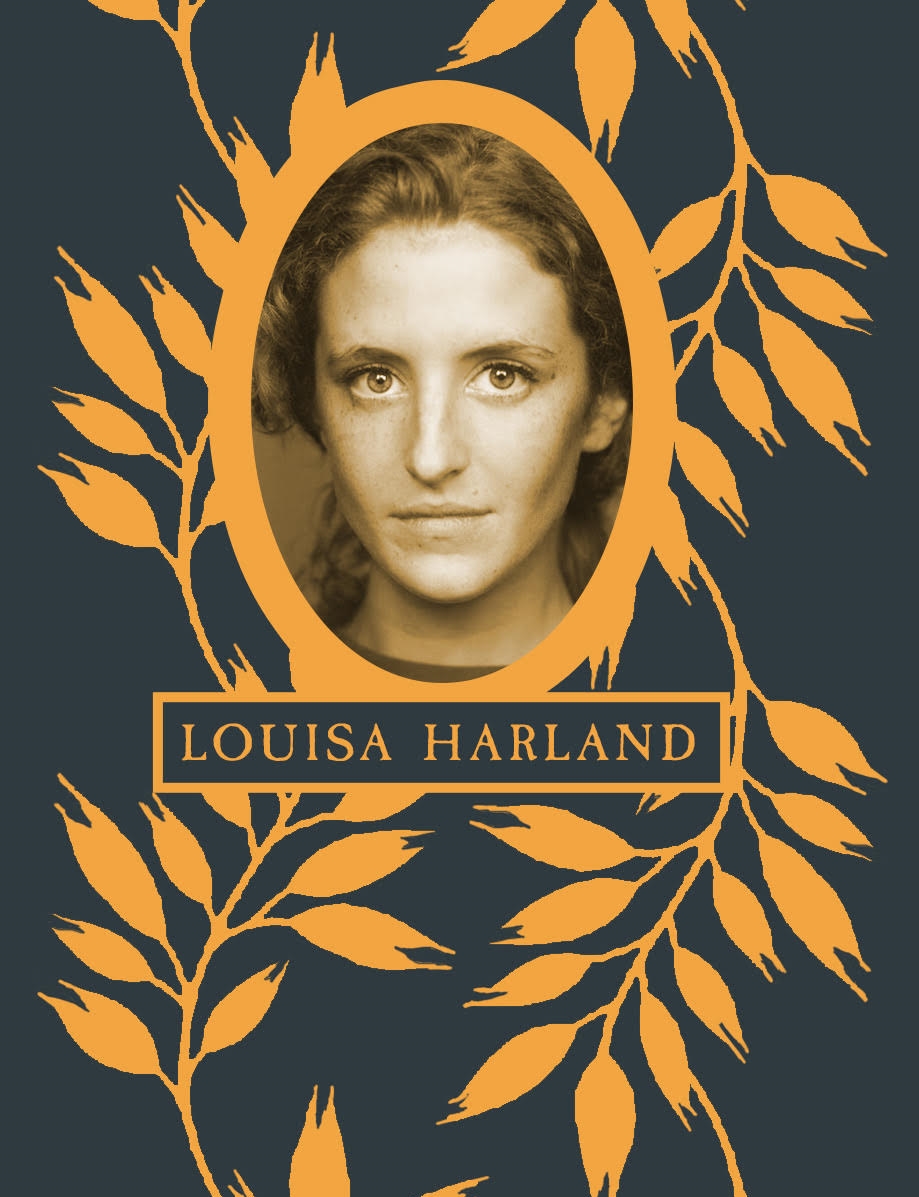
Louisa May Alcott herself narrates his story, played by (aptly-named) actress Louisa Harland (Derry Girls), and while she toys with the idea of renaming her characters, she quickly changes her mind. “We might give them their proper names,” Louisa decides, and from there, she begins to tell the whole truth.
Suddenly, the listener feels that they are not watching from the outside but eavesdropping from the attic inside the red Fruitlands farmhouse.
Owing to Rowett’s history as a sitcom writer and staying true to the original short story’s tone, “Transcendental Wild Oats” is delightfully funny. Sentences that seem almost like a throwaway in Alcott’s short story are transformed into sketches that leave the listener in stitches. A sentence in Alcott’s version–“Brother Moses [Joseph Palmer] brought a yoke of oxen from his farm,–at least, the philosophers thought so till it was discovered that one of the animals was a cow”–becomes a whole scene in the adaptation. And Joseph Palmer, voiced by actor Christopher Godwin, becomes the gentle voice of reason that holds together an otherwise unanchored crew.
This cast of unlikely characters seems like exactly that: a list of quirky people who could easily be reduced to their odd, identifiable traits. A bearded man; an anarchist; a nudist. Yet this play isn’t a comedy, and at its heart, it really sees the characters and presents them as complex, even tragic. Yet another reason why it feels important to use their historical names.
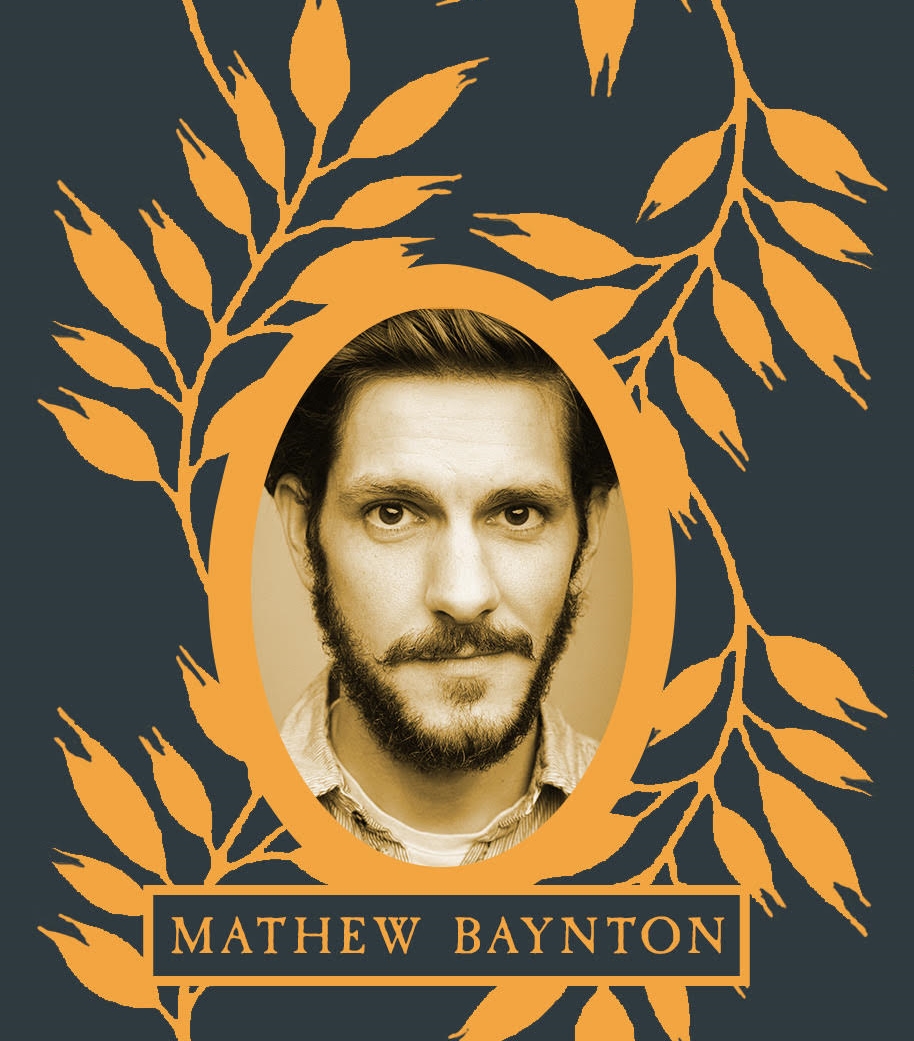
I have been an Alcott historical interpreter across many contexts, and it’s always a challenge not to reduce Fruitlands to its ridiculous set of rules. It’s too easy to make fun and to take a cheap laugh by saying, “Can you believe it? They kicked out a woman who ate a piece of fish!” Even Alcott herself could hardly resist poking fun at what she called the “ludicrous contrast” of the incident, noting that while Jane (the name Alcott gave to Fruitlands resident Ann Page) was being reprimanded by Charles Lane portrayed by Mathew Baynton,, there was “a peal of laughter” from the children.
Rowett, instead, takes humor that resonates as Alcottian–”Flesh! Fish flesh!”–and then goes on to show how Fruitland’s rules stripped individuals of their personal freedoms and reduced them to a set of arbitrary guidelines. The sobs of Ann Page, played by Patricia Rodriguez, are not a brief mention on the page, but the pain of a person who arrived with the hope of finding a new life and a family and who faced permanent exile for a single transgression.
By situating the play in its historical context, Rowett is able to give the story a broader reach. He creates connections to other Alcott works and makes references to other events in the Alcotts’ lives. Many of the lines of the play have a deeper resonance of truth when spoken from Louisa’s own perspective.
For example, when Lane is interrogating a young Louisa to describe her list of faults, Louisa’s response not only captures the themes of the play but foreshadows the books she will later write that will bring her everlasting fame and glory.
Lane accuses Louisa of loving her family to the exclusion of all else. Louisa, who would eventually write a book that celebrates a family as the center of a fulfilling emotional life, cannot bear to think of this as a fault. She replies, “I think family is the most beautiful thing in the world!” And we know, she really does.
I would be remiss to write a review for Louisa May Alcott Is My Passion and not include Rowett’s treatment of Lizzie Alcott, who also receives loving mention in one of the more heart-grasping lines of the play, on Lizzie’s eighth birthday. Again, it is thanks to his willingness to connect the story to the rest of the Alcott history that Rowett is able to simultaneously foreshadow Lizzie’s death and bring her to life.
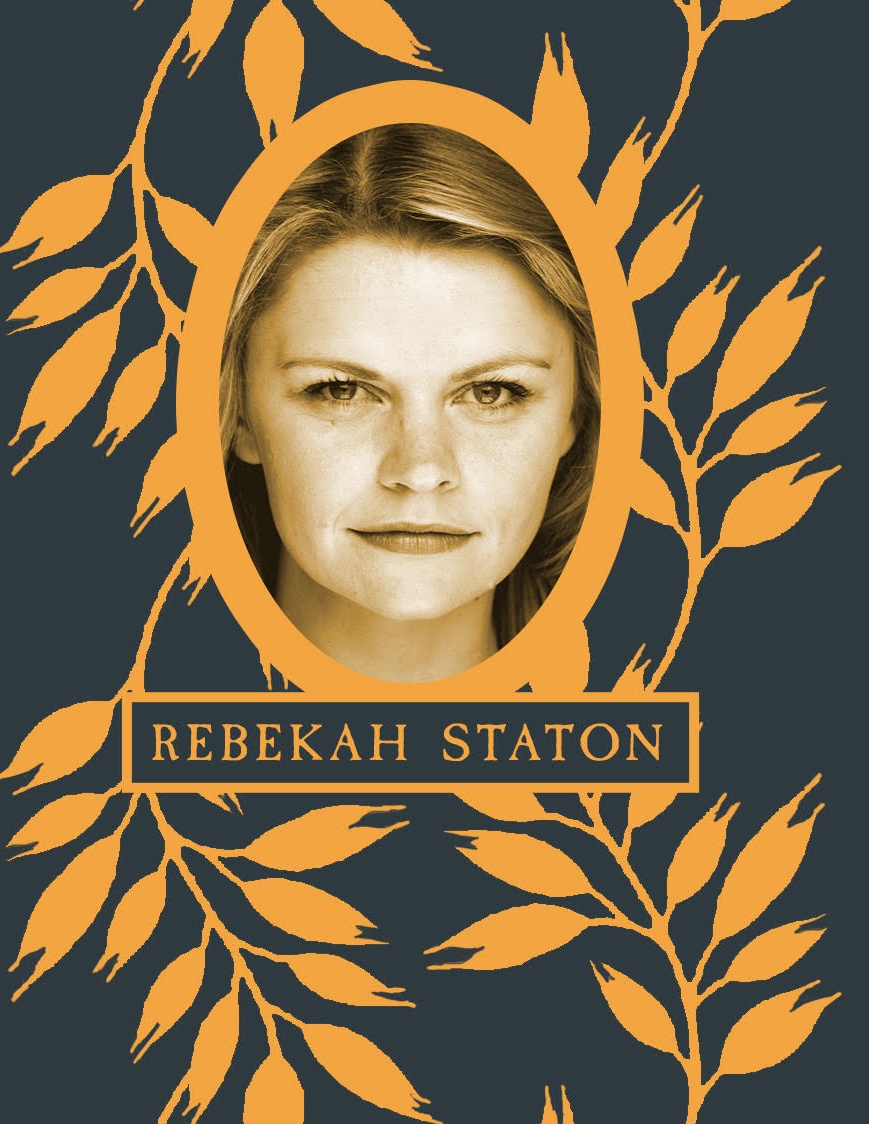
Even the scant liberties that Rowett takes remain true not only to the sense of the story but to the Alcotts’ personalities. Abigail, played by Rebekah Staton, is especially faithful to her historical persona, and the listener can hear the tense frustration in her voice even as she soldiers on, trying to care for her daughters (and her husband) while the burdens of the household are piled upon her. The story ultimately celebrates the connection between Louisa and Abigail, who belong to each other. It is because of Abigail’s protection and love that Louisa is able to write this story at all.
By the end of the play, it’s clear that the Fruitlands experiment was always doomed to fail, that many people saw it coming even though they hoped they were wrong. In the Alcott version, “Transcendental Wild Oats” ends with Abel Lamb’s turn toward life with a single word: “Hope!” which is both the next step in the life of the downtrodden family and the invented name of Abigail in the story.
It’s an ending that gets tied with a bow, something that has always felt a little too tidy on arguably the greatest trauma of Alcott’s young life. Rowett, again, doesn’t take the easy way out. He includes a coda with a more complex resolution, giving the listener a glimpse into the Alcott’s later years, the writing of “Transcendental Wild Oats,” and the changing nature of parent-child relationships over time.
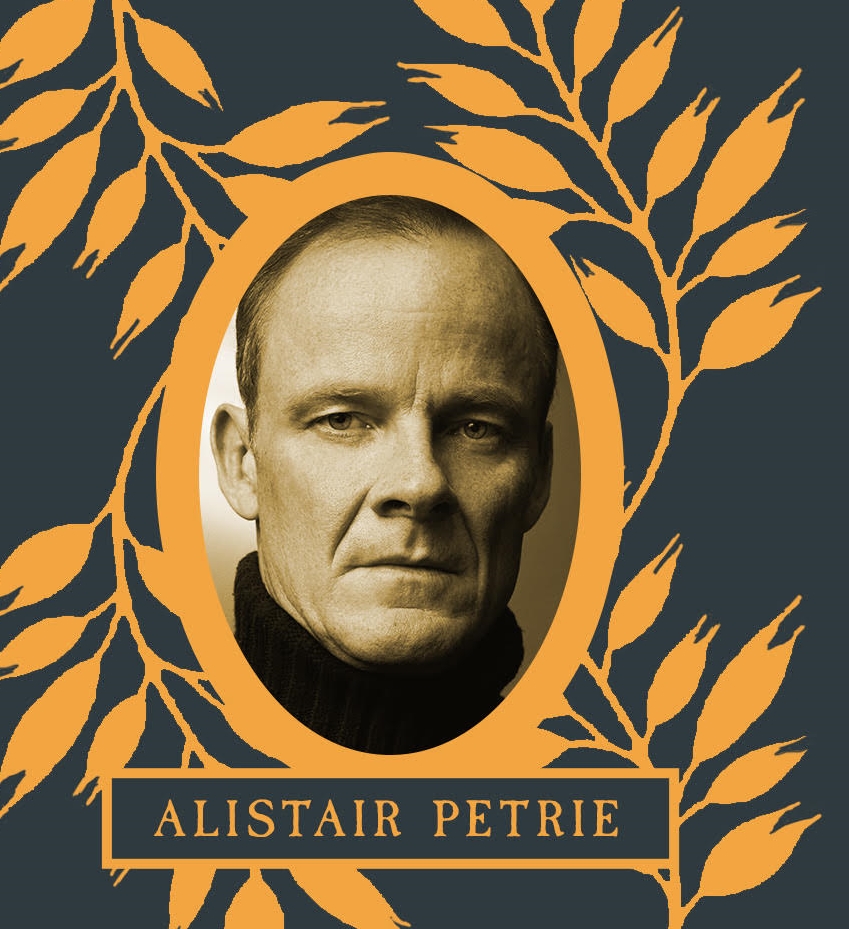
I first listened to the adaptation not through headphones but through a speaker in my kitchen. I truly felt like the Alcotts were talking in the next room. It wasn’t just that the story came to life–it was as if it were the real Alcotts. Not the invented names of Timon Lion or Abel Lamb or even dear Hope, but their real names–Bronson, Abigail, portrayed bt Alistair Petrie Louisa–and hearing their names through the spoken voices was deeply impactful. This play would not carry the same emotional weight if Rowett had not taken the risk to remove the veil.
It was Louisa May Alcott’s magic that she could take traumatic family events and spin them into heartwarming family stories. I am so glad that Edward Rowett used his own magic to give us a truer, more biographical depiction of this event. It is a gift to those who love the Alcotts that this play exists. And–to the idea that more adaptations may be willing in the future to take this risk and to make the biopics we dream of, I have but one word–
“Hope!”
Transcendental Wild Oats will air on BBC Radio 4 on Saturday, February 7 at 3PM (GMT). It will be available worldwide at its original airing time on https://www.bbc.com/audio/play/live/bbc_radio_fourfm and on the BBC radio app.
Edward Rowett is a writer based in Oxford, England. Transcendental Wild Oats is his first broadcast drama.
CAST
Louisa May Alcott – Louisa Harland
Bronson Alcott – Alistair Petrie
Abigail Alcott – Rebekah Staton
Charles Lane – Mathew Baynton
Joseph Palmer – Christopher Godwin
Samuel Bower – Tom Moores
Abraham Wood – Edward Rowett
Ann Page – Patricia Rodriguez
Ralph Waldo Emerson – Jason Barnett
Anna Alcott – Victoria Rigby
Jamie Burgess is the co-creator of Let Genius Burn, the podcast about the life and legacy of Louisa May Alcott.
Are you passionate about
Louisa May Alcott too?
Subscribe to the email list and
never miss a post!
Facebook • Instagram • X

 Louisa May Alcott is My Passion