

Ever since the publication of Little Women in 1868, readers have been enchanted with Theodore “Laurie” Lawrence and were bitterly disappointed when Jo March rejected his marriage proposal. The dark, handsome, and lively young man loved pulling pranks, often engaged in fiery discussions with Jo, and was there for her in every significant moment of her life. She loved him fiercely but as a brother, not a future husband. Laurie eventually learned to love her younger sister Amy, and the two were married, much to the chagrin of his many fans.
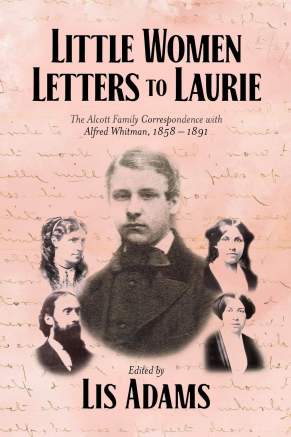 Louisa May Alcott had always maintained that Little Women reflected her own family, with Meg being Anna, Jo, Louisa, Beth, Lizzie, and Amy, May. But who was Laurie Lawrence based upon? Louisa revealed that Laurie was the composite of two young men: a romantic interest named Laddie Wisniewski, whom she met in Europe, and 15-year-old Alfred Whitman, who had lived for a short time in Concord. What we know of Wisniewski comes from Louisa’s journal. Alf Whitman, however, regularly corresponded with the remaining three sisters throughout their lives. While only a few letters from him have survived, scores of letters from the sisters reveal a great deal
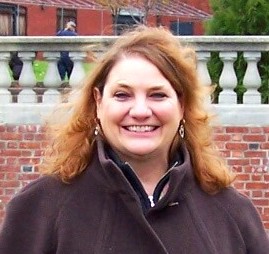
Lis Adams, education director for Louisa May Alcott’s Orchard House, has compiled a book titled Little Women Letters to Laurie: The Alcott Family Correspondence with Alfred Whitman, 1858 – 1891. Her book contains the complete collection of letters written by the sisters, plus the few surviving letters of Whitman. I had a chance to interview Adams about this fascinating and important work which reveals yet another aspect of the lives of the Alcott sisters.
1. What inspired you to transcribe these letters? What makes them special to you?
This correspondence between Anna Alcott Pratt, John Pratt, Louisa May Alcott, Abby May Alcott, and Alfred Whitman, one of the real-life models for Laurie in Little Women, offers readers a unique insight into both the world of the writers and the social, political, and cultural world of the 19th century. We not only get a personal glimpse into the minds and souls of these five people, but we can learn more about their views of life and their relationships with each other and the people in their social circles. I learned a lot reading them and knew that others would find them as fascinating and informative as I do.
There is also a huge fan base for the character of Laurie in Little Women! I rarely give a tour at Orchard House without someone asking if there really was a “Laurie.” I hope this book will answer some questions for those readers. Some will be amazed to learn who Alfred Whitman was and all that he accomplished in his lifetime.
2. Most researchers struggle mightily with transcription. What tips can you offer to others who struggle with transcribing?
Gee, I don’t know what to say about transcribing. It’s just something I got very good at over the years. I was once upon a time a medical transcriptionist—and maybe trying to decipher the handwriting of all those doctors was good practice! One important tip would be to remember the context of what you’re trying to decipher. That often helps. The other is matching letters of the unknown word with letters in known words in the handwritten note. One method that helps to figure out a whole word is getting some of the letters first and then considering the context of the sentence.
2. Eminent Alcott scholar Joel Meyerson wrote the foreword to your book. What role did he play in making it come together? Did he help you with the transcriptions?
Joel Myerson also generously gave permission for me to include the letters from Louisa May Alcott to Alfred Whitman that appear in his Selected Letters of Louisa May Alcott, which he and Daniel Shealy, along with Madeleine Stern, published in 1984. Except for those sixteen letters, I did all the transcriptions and notations in Little Women Letters to Laurie, including three additional letters from Louisa that were not included in Myerson’s book. Myerson also gave me access to his collection of letters from Alfred Whitman to the editor of Ladies’ Home Journal, Edward Bok, which I transcribed and included in the appendix of Little Women Letters to Laurie, in a section called “Words from Laurie,” so that readers can see that Whitman also enjoyed writing, though his letters to the Alcotts have been lost.
It took at least five years to complete this project between transcribing and notating the letters, writing the introduction, and gathering the rest of the materials for the book, including the many images.
3. What convinced you to self-publish the book, and how was your experience? Whom did you work with?
The simple answer to this is that I was able to work on the book at my own pace, and I was able to have a say in the formatting and finished look of the book. Palmetto Publishing was extremely supportive and helpful with every step of the process, and I couldn’t have been more pleased with the results.
4. One of the loveliest surprises in reading your book was to see all the new photographs! Have you always known that they were in the archives?
The photographs and images came from many different sources, and readers will see the sources cited with each image.
5. What is the most significant value the one can derive from reading these letters? How do you believe these letters will enrich the story of the Alcott family?
The greatest feeling that comes across when I read the letters is the strong bond of friendship between the Alcott sisters, John Pratt and Alfred Whitman. He was like a beloved brother to them; time and distance never dimmed that affection. These letters are very personal reflections of the characters of each of the correspondents, so the very intimate glimpse into each of the writers’ lives will help readers to gain a better understanding of who the real-life counterparts of the fictional characters in Little Women truly were.
6. Do you have any plans to give presentations about the book?
I’d certainly be open to it if the opportunity occurs.
7. Where can your book be purchased?
Little Women Letters to Laurie is available in the shop at Louisa May Alcott’s Orchard House in Concord and will soon be available in other bookstores. Readers can also purchase it on Amazon, at barnesandnoble.com, booksamillion.com, target.com, and various other websites that sell books. Bookstores can order it through Ingram.
8. Do you have any plans for future books?
I have many ideas, so I look forward to seeing where they take me!
 Are you passionate about
Louisa May Alcott too?
Subscribe to the email list and
never miss a post!
Facebook • Instagram • Twitter
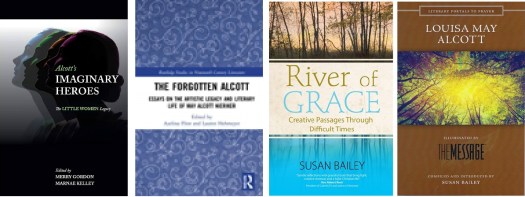 Find Susan’s books here on Amazon
 Louisa May Alcott is My Passion
Thanks for sharing!